Tuesday, November 23, 2010

Copyright Caution


The holiday season is about to kick into high gear, and so is the energy level of students. Many schools, particularly at the elementary level, choose to schedule movie screenings as a fun group activity.

Unfortunately, this practice is illegal, in most instances.

Copyright and fair use regulations can be difficult to decipher. Tools like the Fair Use Evaluator recommend that users "collect, organize & archive the information you might need to support a fair use evaluation" while cautioning that "Only a court of law can definitively rule on whether a use is fair or unfair. This tool does not assume or predict a court outcome."

When it comes to movies, however, the rules are quite specific:
"the showing of copyrighted motion pictures (videos and DVD's) outside of a classroom educational setting (including such uses as after school programs, student rewards, rainy days, lunch hour movies, summer camps, clubs, assemblies, staffing emergencies and idle periods between state testing) constitutes copyright infringement." -Showing Movies at School

There are some exceptions:
Under the "Educational Exemption" copyrighted entertainment movies may be shown in a school without copyright permission only if all criteria are met:
  • A teacher or instructor is present
  • The showing takes place in a classroom setting with only the enrolled students attending
  • The movie is used as an essential part of the core, current curriculum being taught. (The instructor should be able to show how the use of the motion picture contributes to the overall required course study and syllabus.)
  • The movie being used is a legitimate copy, not taped from a legitimate copy or taped from TV
-Movie Licensing USA


Schools districts could, of course, obtain a Public Performance Site License or a
One-Time License (as do public libraries) and eliminate any question of illegality.

I was recently contacted by a fellow teacher/librarian who was frustrated by administrators' response to the sharing of this information. They blatantly ignored it. My professional experience has been similar.

Teacher/librarians don't want to be perceived as "copyright cops." But we do feel that teaching and modeling good digital citizenship is part of our role as educators.

How can we preach responsible use to students when adults in authority fail to exhibit ethical behavior?

Now you know the law. Follow it.


"At The Movies" by Clover_1

Tuesday, November 16, 2010

Of Innovation and Roadblocks


I've been planning to blog about my friend, Buffy Hamilton, and her new Creekville High School Library Kindle lab.

Buffy has been modeling best practices and transparency, taking us through every stage of the Kindle project, from preparing the devices for circulation to compiling a resource guide; recording a student Kindle promo to documenting the first Kindle checkout.

Wishing to build on this early, success, Buffy attempted to place an order for additional Kindles...and was blindsided by a new Amazon policy:

Due to strong customer demand, the current quantity limit is 3 Kindle devices per customer. We will forward your inquiry to the Kindle team and someone will contact you if we can meet your requirements and schedule.

A long phone conversation with customer service reps resulted in the same response. No exceptions for classrooms or libraries. Three per customer, period.

What has this policy accomplished for Amazon? In the short term, the loss of an order for 20-25 Kindles might seem an insignificant drop in the bucket. But there may be long term repercussions:
  • educators who have been debating the relative merits of Kindles, Nooks, and other eBook readers might decide to choose the more school-friendly alternatives
  • students will purchase (or request as gifts) the device with which they are familiar
  • as the reader goes, so go the book purchases
This could well be a temporary, pre-Christmas, quota system, but if so, it would have been politic for Amazon to indicate this in response to Buffy's queries.

I have to wonder if Amazon is subtly (perhaps not so subtly) trying to discourage Kindle use by libraries in general, rather than make concessions regarding the lending of eBooks.

Visit The Unquiet Librarian blog and follow the progression for yourself: from enthusiasm to frustration; adoption to...alternatives?

What are you thinking, Amazon? Really.


"CVHS Student Caitlyn Checks Out the First Unquiet Library Kindle" by theunquietlibrary

Monday, November 15, 2010

The Edublog Awards


I've always had a difficult time choosing the "best" of anything - books, movies, even desserts. Absolutes make me feel hemmed in, and I can usually imagine alternative scenarios that would justify a different response.

That said, I feel a responsibility to participate in the annual Edublog Awards. I read, enjoy, and learn from a variety of feeds in my Google Reader. It's time to recognize some of the bloggers who contribute to my personal and professional growth.

Here are my nominations for the 2010 Edublog Awards:

Best individual blog - David Lankes/Virtual Dave...Real Blog
Best individual tweeter - Beth Still/@bethstill
Best resource sharing blog - Wesley Fryer/Moving at the Speed of Creativity
Most influential blog post - Carolyn Foote/Listening to teacher voices part 2
Best teacher blog - Sylvia Tolisano/Langwitches
Best librarian / library blog - Buffy Hamilton/The Unquiet Librarian
Best educational tech support blog - Cathy Nelson/Techno Tuesday
Best educational use of video / visual - Gwyneth Jones/The Daring Librarian
Best educational wiki - Joyce Valenza/New Tools Workshop
Best educational webinar series -The TL Virtual Cafe
Best use of a PLN - Alec Couros/@courosa
Lifetime achievement - Doug Johnson/The Blue Skunk Blog

You can nominate your own favorites. Simply follow these directions:

Step 1: Write a post on your blog linking to:

You can nominate:

  1. For as many categories as you like,
  2. But only one nomination per category,
  3. A blog (or site) for more than one category
  4. Any blog or site you like but not your own blogs (sites)

Step 2: Email us the link to your nomination post

Use the form (on the Edublogs Awards home page) to contact us, please include a genuine email address (spam free, just in case we need to confirm identity) and the link to your nominations post.

You can’t submit your nominations without writing a blog post


Please note: You will receive an automated email reply when you successfully complete the contact form.


An important part of being an educator is self-reflection. Please take this opportunity to review your RSS feeds and social networking sites, determine what content has proven valuable to your life as a learner, and acknowledge those who have influenced your thinking in a positive way.


Friday, November 5, 2010

Reflection


Edmund Burke said that "Reading without reflecting is like eating without digesting." I believe that the same is true of presenting.

As a teacher, I asked that my students practice self-reflection as an integral part of their learning. I wanted them to critically examine their work, to decide what was successful, what didn't quite make the grade, and how they might use their experience in constructing new knowledge.

On Monday, November 1, I presented my first webinar, Eyes to See, for the TL Virtual Cafe. One of the great benefits of using Elluminate as our venue is that the entire session is archived: slides, audio, chat, etc., so I was able to revisit the experience and "see" it from a number of perspectives.

After the initial shock of hearing my own voice, I started to notice speaking strengths and quirks. Pacing wasn't bad, not too many "uhs" but a previously undetected predilection for the word "now" as in "Now sometimes...Now this project..." which immediately brought to mind a sweet family memory. When my daughter was small, she would gather her toy ponies, unicorns, mermaids, and fairies, and begin weaving tales. Frequently the first word of these sagas was "Now..." Did she pick up on that from me, or did I unconsciously echo this totemic word when I began sharing stories with others? At any rate, it was a connection that made me smile.

The content of my slidedeck was appropriate, I felt, if limited by time constraints. In order to supplement and expand the resources shared in the webinar, I've started to build a wiki, Using Digital Images, which I hope will become a useful resource for myself and others.

I had wondered about the dynamics of a webinar. Practice runs left me worried that I would sound stilted, sitting alone and talking into a microphone. I found, however, that even though I couldn't see the faces of my audience, their presence was very real. The online interaction was lively, and it was nice to see familiar names popping up.

Most valuable to me, as both presenter and co-learner, were the comments in the chat section, which I had been unable to follow while speaking. Participants shared projects and links that deepened the conversation; they will provide a rich source of additional material for the wiki.

There were a few technical glitches, mainly due to a prior Elluminate session that hadn't properly exited the room, but the always incredible Gwyneth Jones, handled the situation with great aplomb and even created a special handout explaining how to access the archive.

What I Knew: I was familiar with the content of my slides and comfortable with the topic in general

What I Wanted to Know: How to effectively communicate in a new (to me) format

What I Learned: Practice sessions are important (thank goodness Gwyneth pointed out that an exterior microphone was vital!); an experienced hostess makes everything flow smoothly; webinars are fun!

Would I do it again? Absolutely!


Related Resources:
Archived session, Eyes to See
SlideShare, Eyes to See
Using Digital Images wiki
Resources and Links blog


See a listing of upcoming webinars on the TL Virtual Cafe here


Monday, November 1, 2010

Eyes to See

This is the slidedeck from tonight's webinar at the TL Virtual Cafe.


Thanks to all who attended!

Wednesday, October 27, 2010

TL Cafe: Eyes to See


On Monday evening, I'll be the guest presenter for a TL Virtual Cafe webinar. A link to the Elluminate room will go live shortly before the session begins.

If you can join us, please do. I'd love to "see" you there!

Eyes to See: Using Digital Images in the Classroom
November 1st - 8pm EST
Guest: Diane Cordell
Host: Gwyneth Jones

According to the Visual Teaching Alliance, approximately 65% of the population are visual learners; the brain processes visual information 60,000 times faster than text; visual aids in the classroom can improve learning by up to 400%.

With the advent of inexpensive, simple to operate digital cameras, teachers and librarians have the opportunity to involve students in activities that are engaging and enriching. "Eyes to See" will explore various ways to enhance curriculum through the use of digital images.


Monday, October 25, 2010

SLJ Leadership Summit 2010: The Future of Reading


Last week, I attended my first SLJ Leadership Summit. Here are some of my impressions, thoughts, and, of course, photos.


The location
: Although I've passed through Chicago many times, this was my first real visit to the city. Without much time to sight see, I did manage to walk around a bit, exploring the stores on the Magnificent Mile and snapping pictures of the amazing skyline.


The people
: re-connecting with my Tribe was, as always, a joy. But, on a broader scale, it was wonderful to be at a conference where everyone had a similar focus and a common vision regarding the profession of librarianship and the importance of both books and technology in libraries. This wasn't a print vs. eBooks crowd: speakers and attendees engaged in a rich dialog regarding the necessity of many tools to enhance and enrich the library experience of the students - and teachers - that we serve. It truly was a summit for Leaders.


The presentations
: Keynote speaker Stephen Abram set the tone by considering "The Future of Reading in 2020." Although he envisions changes, it's more of an evolution than a revolution, with librarians not just participating but leading. Abram concludes by assuring us that "It gets better. Librarians can help."


Student Voice was represented at the Summit by students from University Laboratory High School, accompanied by their librarian, Frances Harris. These articulate young people shared some insights about their life as readers. All of them had been read to by their parents, as children; their favorite genres are sci fi/fantasy; finding the time for recreational reading is a problem, due to packed schedules; all prefer print books, though they might consider eBooks for college texts (price is a definite issue).


Members of the Carnegie Council for Advancing Adolescent Literacy shared data pertinent to this topic, then discussed their recommendations for adding value to eReaders for classrooms and libraries. This list is still in draft form, and contains important points that need to be considered by both educators and developers: for example, the Council wants devices to have multiple capabilities that can be enabled or hidden by the librarian/teacher depending on student needs. In response to audience feedback, Council members agreed to incorporate strong language regarding the key role of librarians as leaders in the adoption of new reading technologies.


Author Patrick Carman talked a little about his personal relationship with books, then demonstrated how he enhances his stories with interactive features that turn the reader into a co-creator of the narrative. Trackers, for example, is "told through a collage of videos, text, and websites." It is not merely a book that you read; it is a world that you experience.


Caldecott-winning illustrator Paul Zelinsky walked us through the evolution of his newest picture book, Dust Devil. Although Zelinsky would appear, on the surface, to take a more traditional approach to books and reading - and was passionate in expressing a preference for print - his presentation included both electronic and "steampunk style" tools.


There was much more to hear, discuss, and ponder at the SLJ Leadership Summit. Many of the sessions were taped, and School Library Journal will be sharing archives on the conference site, as they become available.

Thanks to the corporate sponsors, and School Library Journal, for offering this opportunity to convene, connect, and construct.


My photos of the conference are here. The SLJ Summit 1o group can be found here.

Thursday, October 14, 2010

Sometimes Good Things Happen to Good People

"Library Dream Team: Tammy Beasley, Buffy Hamilton, Roxanne Johnson, Dr. Bob Eddy" by theunquietlibrarian


Congratulations to a dear friend, and tireless worker for all that is positive in school libraries,

Buffy Hamilton

who has just been designated "Georgia Library Media Specialist of the Year for 2010"

In August, Buffy (aka The Unquiet Librarian) and her fellow librarian, Roxanne Johnson, received recognition as one of two “exemplary” high school library programs for the state of Georgia.

On October 12, Buffy was named to the National School Boards Association's list of "20 to Watch" for education technology leadership.

Today, the Georgia Library Library Media Association honored Buffy Hamilton for excellence in her profession.

Well done, Buffy, and well-deserved!


"Friendship" by dmcordell

Tuesday, October 12, 2010

Listen and Learn


"Do not pass by my epitaph, traveler.
 But having stopped, listen and learn, then go your way." -Roman Tombstone


I have always been fascinated by old graveyards, those rambling, untidy cities of the dead. Love and longing, loss and sweet remembrance all find expression there.

Our American children celebrate Halloween, All Hallow's Eve, by wearing costumes and harvesting bags of treats from friendly neighbors. This harmless fun stems from the ancient Celtic belief that
"the border between this world and the Otherworld became thin on Samhain, allowing spirits (both harmless and harmful) to pass through. The family's ancestors were honoured and invited home while harmful spirits were warded off. It is believed that the need to ward off harmful spirits led to the wearing of costumes and masks. Their purpose was to disguise oneself as a harmful spirit and thus avoid harm." -Wikipedia
The Catholic Church has recast this pagan tradition as two Autumn feast days, All Saints' Day (All Hallow's Day), November 1, and All Souls' Day, November 2, both intended to honor the Christian dead.

There are many stories to be told in cemeteries, and the cross-curricular possibilities are endless.

I've gathered a collection of links and resources in a cemeteries wiki that is available for use by any interested educator.

Suggestions range from mapping grave sites to analyzing tombstones; composing epitaphs to writing dramatic "tours;" preserving history to researching ancestors.

The Poets' Corner memorial plaque for T.S. Eliot reads, "The communication of the dead is tongued with fire beyond the language of the living."

Listen and learn.


Related posts:
Remembering
Truthville
The Brisbins of Saratoga County


"Requiescant in Pace 11/01/09" by dmcordell
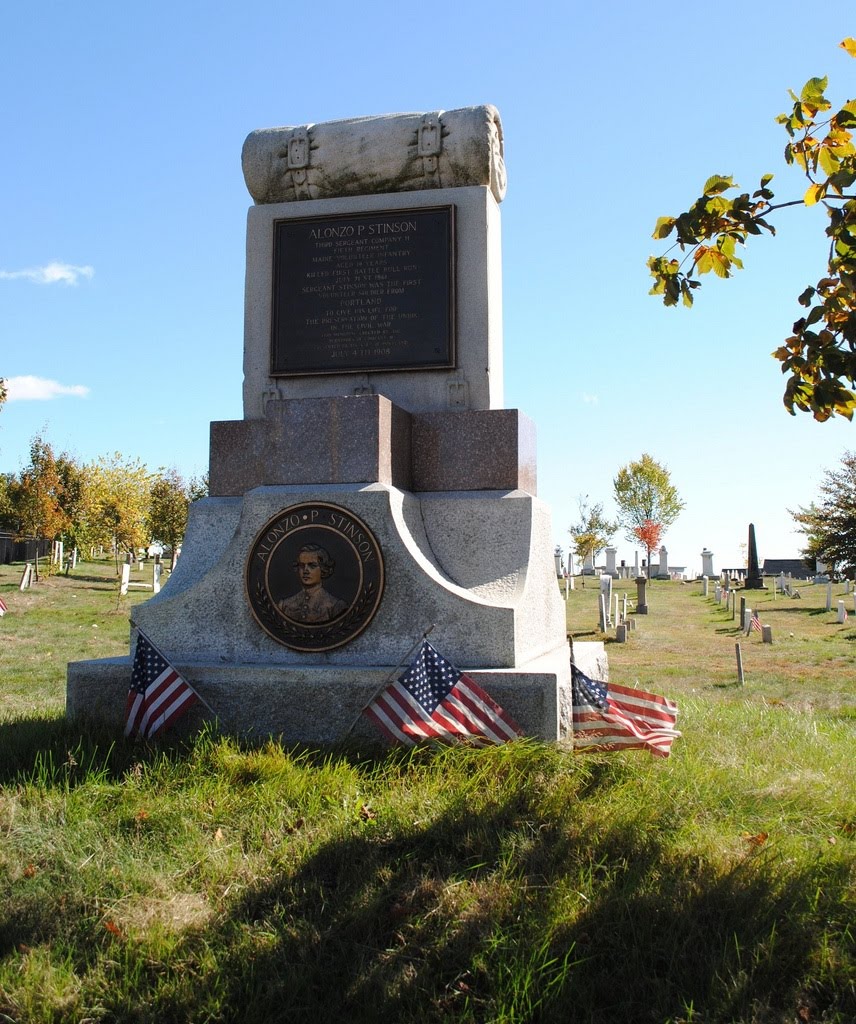
"Alonzo P. Stinson" by dmcordell

Monday, September 27, 2010

Making It Real


Knowing that I'm "retired" and more apt to have free time than most members of our PLN, my friend Buffy Hamilton asked if I could do a live demo of document sharing in Google Docs this morning.

Buffy's lead off question was, "What are our favorite social media and web 2.0 tools?"
I contributed a few favorites, while she showed her students some of the editing options.

Since I had mentioned Google Reader, I opened a tab and checked my subscriptions. One item that caught my attention was Stephanie Sandifer's Education Reform Brainstorming posting. Like many educators, Stephanie has been concerned that "current dialogue around education reform
" does not adequately represent all stakeholders. Rather than merely rant or walk away, Stephanie has created a both a survey and a spreadsheet for brainstorming, hoping to built "a space that can become a repository of ideas for everyone involved and invested in improving the schools across our nation."

"EVERYONE is invited to help brainstorm ideas! Teachers, administrators, parents, students, community members, education researchers, anyone and everyone who is interested and who has an idea."

Stephanie mentioned students, those whose lives will be most directly affected by educational reform...or the lack thereof.

So I shared the links with Buffy and her class, a serendipitous opportunity to turn a demonstration into an exercise in authentic learning.


If your students are blocked from accessing these tools from school, please do as I once did with my Current Events classes: have them express their opinions verbally or in writing, then add the student comments yourself to Stephanie's document.

This is an important conversation. ALL voices need to be heard and valued.


"Put Learning in the Hands of Students" by katerha